01
The wallet is generated
A real Solana keypair is created for the piece. The public key becomes the artwork; the private key ships with the garment, printed once, for you alone. We do not keep a copy.
One of one · Solana mainnet
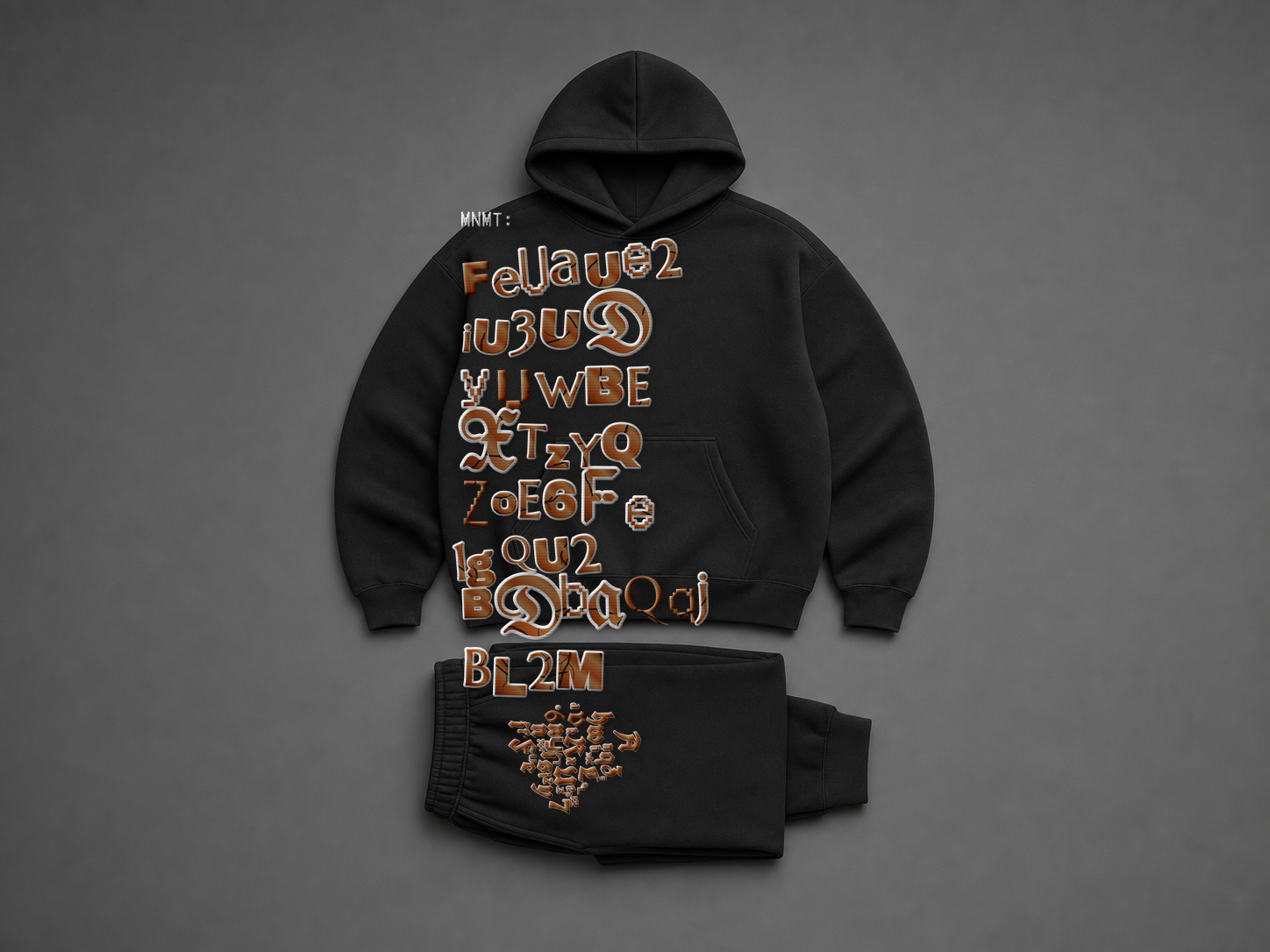
Every garment is issued with its own wallet. That wallet's address is embroidered onto the piece — not as a label, not as a logo, as the design itself. Tops and bottoms are sold as sets, so a set arrives with one live wallet per garment, and no two compositions are alike because no two addresses are.
Anyone can read the address off the garment and check it on-chain. That is the whole point.
What you are actually buying
The clothes have to stand on their own — heavyweight fabric, oversized cut, considered finishing. If the chain disappeared tomorrow you would still want the hoodie. The wallet is what makes it yours specifically.
01
A real Solana keypair is created for the piece. The public key becomes the artwork; the private key ships with the garment, printed once, for you alone. We do not keep a copy.
02
An engine composes the 44 characters across mixed typefaces, scales and baselines, then emits the embroidery file directly. Chaotic, but always readable — you should be able to transcribe it by eye.
03
Read the address off the garment, or tap the tag. The resolver shows that wallet's live position on mainnet. No account, no app, no permission required.
The collection
Tops and bottoms are sold as sets. The exceptions are jackets, across all three lines, and the white shirt in STRUCTURE — those are the only pieces sold on their own. Hoodies are not jackets, and no pant is ever sold separately. Every garment carries its own complete address, every character verified before its stitch file is written, and the status below is read from mainnet rather than from our database.
Thread, not ink
None of this is printed. There is no ink, no vinyl, no transfer and no screen. Each address is stitched into the cloth in real thread, tens of thousands of stitches per piece, which is why it has depth you can feel with a fingertip and an edge that catches the light as you move.
01
Print sits on top of fabric, so it cracks, fades and peels — a printed address becomes unreadable, and an unreadable address is a broken promise. Thread is part of the cloth. Wash it, wear it for years, and the address still resolves.
02
The heaviest pieces run past 50,000 stitches. On the VOID coats and bombers the lettering stands proud of the fleece with a contrast pass behind it, so the characters hold their shape instead of sinking into the pile.
03
A printed run reuses one artwork across every unit. Here the artwork is the wallet, so every single piece is a unique composition made once and never repeated. There is no second copy of your garment.
Embroidery is slower and costs more than printing, per piece and by a wide margin. It is the only method where the address is still legible — and still scannable — after the garment has had a life.
Three branches
Loud, chaotic, unmissable. The full address across the front in mixed faces, orange on charcoal, with a white offset pass so the letterforms hold their edge on plush fleece. 350–500 GSM, oversized. Two colourways: black stitched in orange, dark grey stitched in purple. This is the branch that launches first.
The same address, whispered. A single monospaced line at a cuff or a pocket edge, charcoal on bone. Reads as a detail until someone looks twice. The brand name moves to the interior label so the exterior stays clean.
Stripped to nothing but the address, set wide and low on black. No wordmark, no accent colour, no ornament. If you know what it is, you know.
VOID adds two grey colourways — light and dark — stitched in purple rather than orange. Orange stays with black.
Resolver
Type the address embroidered on it. You will get that wallet's live position on Solana mainnet — balance, holdings and recent activity. It works from any browser, for anyone, including people who do not own the garment.